
Why Hong Kong's Richest Towers Are Aiming Cannons at Each Other
Some buildings were designed with energy in mind. Others completely ignored it, and it cost them.
Here's what a few famous buildings can teach us about space, intention, and the energy of a place.
The Hong Kong Skyline Has a Quiet War Going On
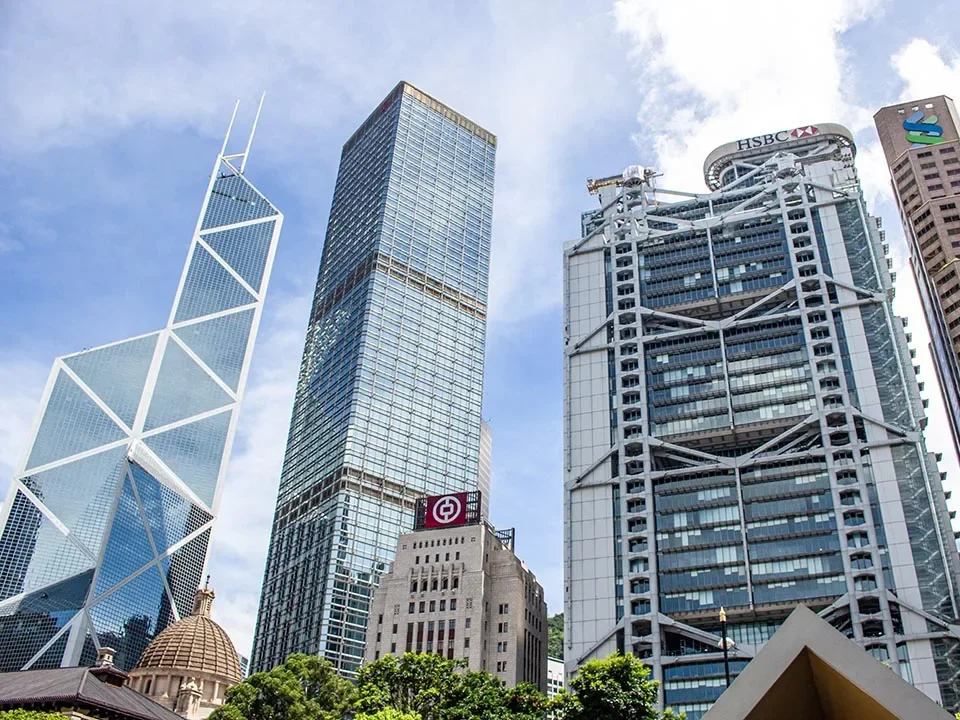
Since 1990, two glass towers in Hong Kong have been locked in a standoff. Most people walk right past it without noticing. But look up, and you'll see it: one tower has rooftop structures that look like cannons aimed directly at the other. The other fires back with sharp triangular edges like blades.
That's not an accident. That's Feng Shui in action.
The Buildings That Got It Right
HSBC Hong Kong
When Norman Foster designed HSBC's headquarters in 1985, a Feng Shui master sat at the table from day one. Not brought in at the end to bless the finished building, but actually helping make decisions.
You see it once you know to look for it.
The ground floor has no solid walls. In Feng Shui, chi — life energy — needs to flow. Block it at the entrance and you kill the building. Foster left the ground floor open and column-free, so the city's energy flows straight through without getting trapped.
The escalators are angled diagonally, not pointing straight at the door. That's deliberate. It slows the energy down, keeps it from rushing in one second and disappearing the next.
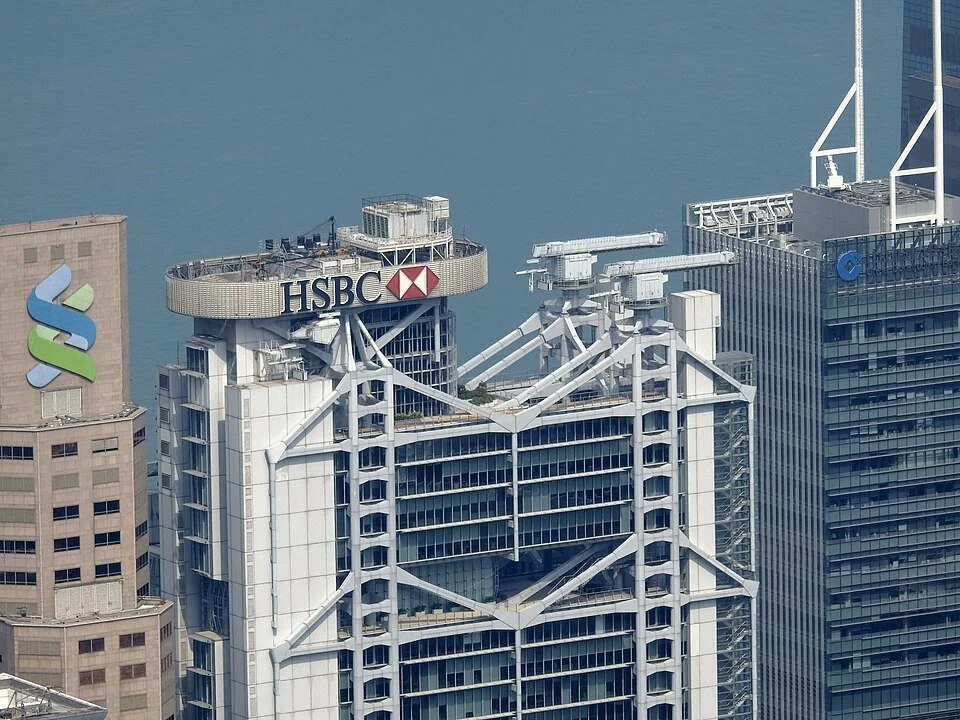
And those rooftop "cannons"? They're aimed directly at the Bank of China Tower across the street. Because that tower, as it turned out, had a problem.
The Bank of China Tower — The Accidental War
I.M. Pei's Bank of China Tower is gorgeous. Triangular glass facets rising 367 meters. Clean, angular, unmistakably modern. It was built to project ambition and growth, and it did that job well.
But those sharp triangular edges? In Feng Shui, they're called sha qi — cutting energy, or poison arrows. And they point straight at several neighboring buildings, including HSBC.
What happened next wasn't a design review. It was a quiet fight.
HSBC put up those rooftop cannons to deflect the cutting energy. Buildings across the street reportedly planted rooftop gardens as buffers. The Governor's residence, also caught in the crossfire, redesigned its garden with specific trees to absorb the energy.
Two of the world's most powerful financial institutions, quietly fighting a Feng Shui war on the Hong Kong skyline. That's architecture as an energy conversation.
The MGM Grand, Las Vegas
When the MGM Grand opened in 1993, its main entrance was a giant lion's mouth. You literally walked through a lion's mouth to get into the casino.
Bold branding, right? And it was — until Asian guests, partners, and consultants pointed out the obvious: walking into a lion's mouth means you're getting eaten. In Feng Shui, that's one of the worst things you can do to an entrance.
The lion came down. The entrance got redesigned. The MGM Grand went on to become one of the most successful casino properties in the world.
Sometimes the fix is simple. You just have to actually do it.
The Buildings That Ignored It
The Flatiron Building, New York
The Flatiron's sharp triangular point where Broadway and Fifth Avenue meet is iconic. It's also a sha — a poison arrow projecting cutting energy onto the intersection below.
The building itself is still standing, still famous, over a century later. But the neighborhood directly in its path? It's had unusual turbulence for decades.
You can feel it physically. Stand at that intersection on a windy day and the building creates its own weather.
John Hancock Tower, Boston
The Hancock Tower is a blade. Sixty stories of mirrored glass rising to a thin edge. When it opened in 1976, the windows started falling out — a structural failure that took years to fix.
Officially, it was an engineering flaw. But Feng Shui practitioners look at the building's shape: cutting, piercing, no softness, no curves, nowhere for energy to settle. It repels instead of receives.
The Shard, London
Renzo Piano's tower is exactly what its name says: a shard. A piece of glass pointing upward, cutting into the London sky. It's beautiful, no question. But by Feng Shui principles, it's built to pierce, not to hold.
A building that gathers energy has curves, weight, a base that anchors it. The Shard has a point. Energy doesn't stay there. It just slides off.
What This Actually Means for Design
These aren't cautionary tales about superstition. They're examples of how a building's shape changes how a space feels.
Sharp edges create tension. Open flows create ease. An entrance that faces the right direction welcomes energy rather than pushing it away. Water in the right spot activates a space instead of draining it.
Feng Shui gets presented as mystical, but at its core it's a practical system: read how a space will feel before you build it, then design for that feeling.
At Dezainteria Studio, every project that uses Feng Shui starts with one question: How do you want this space to feel?
Not what it looks like. How it feels when you walk in on a random Tuesday morning, six months after everything's finished.
That one question changes everything that comes after it.
Dezainteria Studio integrates Feng Shui into residential and commercial interior design. Curious what this could look like in your space? Let's talk.
